
Table of Contents
- Why Your Undertone Matters More Than Your Skin Tone
- The Simple Vein Test for Skin Undertone
- Three More Ways to Identify Your Natural Skin Undertone
- Understanding Cool, Warm, and Neutral Undertones
- The Best Colors for Cool Undertones
- When the Tests Are Inconclusive
- Conclusion: Embrace Your Natural Palette
- Frequently Asked Questions
Last Updated: September 7, 2026
Why Your Undertone Matters More Than Your Skin Tone
Your natural skin undertone is the subtle color beneath the surface of your skin, and it stays constant even when your surface tone changes with the seasons, sun exposure, or skincare. Most people confuse undertone with skin depth, but they are different: skin depth is how light or dark your complexion is, while undertone is the color temperature beneath it. Getting this distinction right is the difference between a foundation that disappears into your skin and one that sits visibly on top of it.
The frustration of buying a shade that looks perfect in the store only to look washed out at home is almost always an undertone problem, not a shade problem. When you understand your undertone, every future purchase becomes easier, from foundation and concealer to clothing and jewelry. The right colors make your skin look brighter and your eyes clearer; the wrong ones can make you look tired or sallow, regardless of price.
The good news is that identifying your undertone does not require a professional consultation or expensive tools. A few simple tests done in natural light can reveal your color temperature in minutes.
The Simple Vein Test for Skin Undertone
The vein test is the most popular starting point because it requires nothing but your own wrist and good lighting. Look at the veins on the inside of your wrist in natural daylight, not under fluorescent bulbs which distort color. If your veins appear blue or purple, you likely have a cool undertone; if they appear green, you likely have a warm undertone. If you see a mix of both, or cannot decide which is dominant, you may have a neutral undertone.
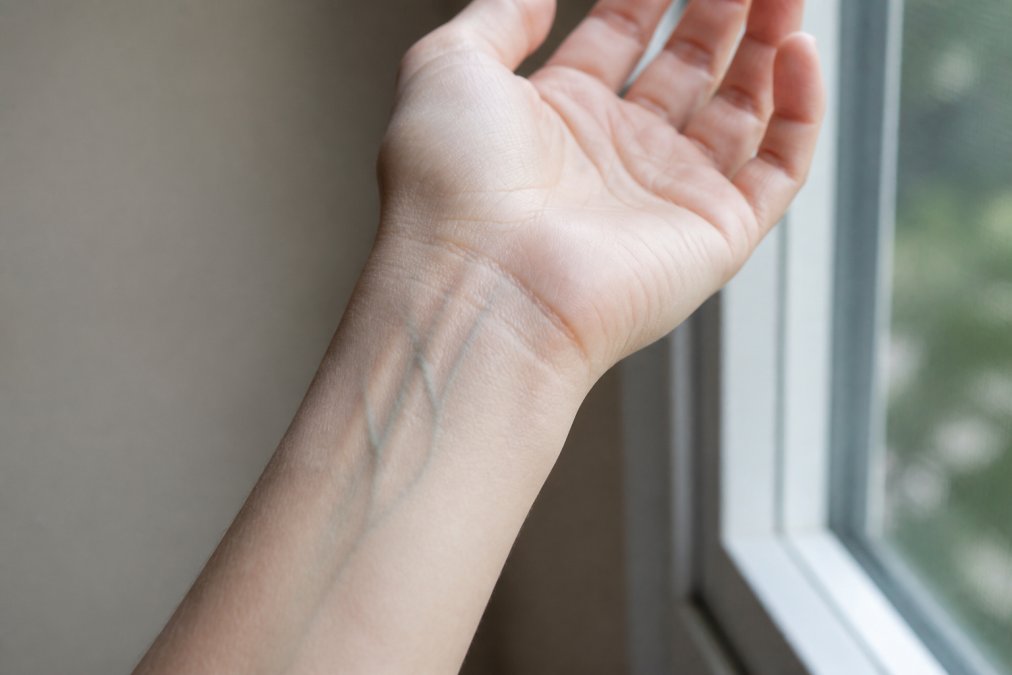
The science is straightforward: veins themselves are always blue because of how light penetrates the skin (peer-reviewed research). The green appearance comes from a warm, yellowish undertone mixing with the blue vein color. This is why the test works best on lighter skin where veins are visible; if you have deeper skin, veins may be harder to see, which is why no single test should be your final answer.
Watch OutDo not perform the vein test under artificial lighting. Yellow bathroom bulbs or cool LED lights will skew the color of your veins and lead you to the wrong conclusion. Always use daylight from a window, not direct sun.
Three More Ways to Identify Your Natural Skin Undertone
Because skin undertone can be subtle, confirming your result with additional tests is wise. Each test looks at a different aspect of how your skin interacts with color, and when they agree, you can trust the answer.
The White Paper Test
Hold a plain white piece of paper next to your bare face, not your wrist, in natural light. If your skin looks yellow, golden, or peachy next to the white, you have a warm undertone; if it looks pink, rosy, or blue-ish, you have a cool undertone. A neutral undertone will show no obvious color shift, and your skin will simply look like itself against the paper.
The Jewelry Test
Gather pieces of gold and silver jewelry, or even just gold and silver foil, and hold each near your face. Warm undertones tend to make gold jewelry look harmonious; cool undertones tend to make silver look brighter and more flattering. If both metals look equally good, you likely have a neutral undertone. This test is particularly helpful because it translates directly into everyday decisions about accessories.
The Sun Reaction Test
Think about how your skin responds to sun exposure. Skin with warm undertones typically tans easily and rarely burns (peer-reviewed research). Skin with cool undertones tends to burn first and tan slowly, if at all. This test is less precise than the others because sun behavior is also tied to melanin levels and skin depth, but it adds useful context when combined with the vein and jewelry tests.
Understanding Cool, Warm, and Neutral Undertones
Cool undertone skin has hints of blue, pink, or purple beneath the surface. People with cool undertones often find that silver jewelry, white clothing, and jewel tones like emerald and sapphire make them look refreshed. Warm undertone skin carries golden, yellow, or peachy hues. Gold jewelry, earthy tones, and warm reds tend to complement this coloring best. Neutral undertone is the most flexible, blending both pink and golden tones, which means most colors in the spectrum work without clashing.
Olive and Muted Undertones
Olive undertone is frequently misunderstood, and it is the main reason standard tests fail for some people. Olive skin has a greenish or grayish cast beneath the surface, often accompanied by both warm and cool elements. Someone with an olive undertone may see green veins, tan easily, and still find that pure gold looks too yellow while pure silver looks too stark. Muted undertones, which are less saturated than bright undertones, can also make the vein test ambiguous because the colors are not as pronounced.
Key TakeawayIf your vein test, jewelry test, and white paper test give conflicting answers, you may have an olive or muted undertone. These complex undertones are common and simply require a more nuanced color approach than the binary cool-versus-warm model.
The Best Colors for Cool Undertones
While most guides stop at telling you which colors look good, the real value is understanding why certain colors harmonize with a cool undertone and how to apply that logic across your wardrobe and makeup. Cool undertones have a blue, pink, or purple base, so the most flattering colors either match that base or provide a crisp contrast to it.
The Mechanism: Blue-Base vs. Yellow-Base
Every color you wear has an underlying temperature. A cool red leans toward raspberry or true crimson because it contains a blue base; a warm red leans orange or brick because it contains a yellow base. When you wear a yellow-base color against cool skin, the contrast creates a sallow, tired appearance, while a blue-base color blends with your undertone and makes your skin look brighter.
This principle extends beyond clothing. In makeup, a foundation with a pink or neutral base will melt into cool skin, while a yellow-based formula will look like a mask. Blush in rose, berry, or cool mauve tones looks natural, whereas peach or coral can look muddy. Lipstick follows the same rule: blue-reds, berry shades, and cool pinks are your safest bets.
The Full Palette for Cool Undertones
Beyond the obvious jewel tones, here is a more complete color map for cool undertones:
- Neutrals: Crisp white, true black, charcoal, cool gray, navy, and taupe with a gray base. Avoid camel, beige, and warm khaki, which can wash you out.
- Reds and Pinks: True crimson, raspberry, magenta, and fuchsia. Avoid tomato red, brick, and salmon.
- Blues and Greens: Sapphire, royal blue, periwinkle, and emerald. Avoid olive, moss, and mustard-adjacent greens.
- Purples: Amethyst, violet, and plum. Avoid eggplant if it has too much brown in it.
- Metals: Silver, white gold, and platinum are your primary metals. Yellow gold can work if it is very pale, but it rarely looks as harmonious as silver.
The Gap: What About Warm and Neutral Undertones?
A common frustration is that most guides only detail cool undertones, leaving warm and neutral readers to guess. The same blue-base versus yellow-base logic applies in reverse. Warm undertones (golden, yellow, or peachy) look best in colors with a yellow or orange base: camel, olive, rust, peach, warm reds, and gold jewelry. Neutral undertones, which blend both pink and golden hues, are the most flexible but still benefit from colors that do not lean too far in either direction; true neutrals like soft white, gray, and muted earth tones are universally safe.
Pro TipIf you have a cool undertone but love a warm color like mustard or camel, do not abandon it entirely. Wear it away from your face, as pants, a skirt, or shoes, so it does not cast an unflattering glow on your complexion.
The Seasonal Shift
Your surface tone may change with the seasons, but your undertone does not. However, the colors that look best on you can shift slightly. In summer, when you have more surface color from sun exposure, you may be able to wear slightly warmer shades without looking washed out. In winter, when your surface tone is paler, you may need to lean harder into your cool palette. This is why a professional color analysis, which uses controlled draping in consistent lighting, can be worth the investment if you find seasonal shifts confusing.
When the Tests Are Inconclusive
If your vein test, jewelry test, and white paper test give conflicting answers, you are not alone. A significant portion of the population does not fit neatly into the cool-warm-neutral binary. The standard tests fail for three main reasons: complex undertones like olive or muted, surface skin conditions that mask the true undertone, and environmental factors like lighting or recent sun exposure.
The Olive and Muted Undertone Problem
Olive undertone is the most common reason standard tests fail. Olive skin has a greenish or grayish cast beneath the surface, often with both warm and cool elements. Someone with an olive undertone may see green veins, tan easily, and still find that pure gold looks too yellow while pure silver looks too stark. Muted undertones, which are less saturated than bright undertones, can also make the vein test ambiguous because the colors are not as pronounced.
If you suspect olive or muted undertone, the standard tests will not give you a clear answer. Instead, try the drape test with muted versus bright colors. Hold a muted, dusty rose or sage green next to your face, then hold a bright, saturated version of the same color. Muted undertones typically look more harmonious with the muted fabric, while bright undertones are enhanced by the saturated color. This test is more reliable than the vein test for complex undertones.
How Skin Conditions Obscure the Tests
Rosacea, acne, hyperpigmentation, and even temporary flushing from skincare can add surface redness or patchiness that masks your true undertone. The vein test on your wrist is less affected by facial conditions, but the white paper test and jewelry test, which are performed on the face, can be completely thrown off by a rosacea flare or a fresh breakout.
Watch OutIf you have persistent facial redness, do not perform the white paper test on your cheeks. The redness will make you appear cool-toned when your actual undertone may be warm or neutral. Instead, evaluate a patch of clean skin on your jawline or neck, where surface discoloration is less common. Cleansing your face and waiting ten minutes before testing gives the most accurate read.
The Role of Lighting and Seasonal Shifts
Artificial lighting is the silent saboteur of undertone tests. Yellow bathroom bulbs skew everything warm; cool LED lights skew everything cool. Always test in natural daylight from a window, not direct sun, which adds its own warm cast. Seasonal changes also play a role. If you have recently been in the sun or used self-tanner, your surface color is temporarily warmer, which can make a cool undertone look neutral or even warm. Wait at least two weeks after significant sun exposure before retesting.
Digital Color Matching Tools: Helpful or Hype?
Virtual try-on apps and digital color matching tools are increasingly popular, but their accuracy varies widely. Most apps rely on your phone camera, which automatically adjusts white balance and can distort your true skin color. They also depend on the quality of the app’s database and the lighting in your room. A review of popular shade-matching apps found that results varied depending on the environment (PubMed). These tools are useful for generating a starting point, but they should never replace the manual tests performed in consistent natural light.
A Step-by-Step Troubleshooting Protocol
When the standard tests conflict, follow this protocol:
- Wait for a neutral state. No recent sun exposure, no self-tanner, no active flushing. Cleanse your face and wait ten minutes.
- Test on your jawline, not your cheeks. This area has the least surface discoloration.
- Use the muted versus bright drape test. This is the most reliable method for olive and muted undertones.
- Compare your wrist veins to your jawline. If your wrist veins look green but your jawline looks pink, you may have a warm undertone with surface redness on your face.
- If still uncertain, seek professional analysis. A trained consultant uses a full set of drapes in controlled lighting to identify undertone, including complex olive and muted categories that home tests miss.
Key TakeawayConflicting test results are not a failure, they are a signal that your undertone is more complex than the binary model. Olive, muted, and neutral undertones are common, and they simply require a more nuanced approach than the vein test alone can provide.
Conclusion: Embrace Your Natural Palette
Your natural skin undertone is one of the most useful pieces of information you can carry into any beauty or fashion decision. The vein test, white paper test, jewelry test, and sun reaction test together give most people a confident answer in under ten minutes. For those with olive, muted, or otherwise complex undertones, the answer may require more patience or professional guidance.
At Find Yourself Style, our Certified Color Consultants help clients move beyond guesswork. We combine clothing, makeup, and jewelry into a cohesive color strategy that reflects who you are. Rather than handing you a list of rules, we teach you how to shop with confidence and build a wardrobe that feels authentically yours. Get started with Find Yourself Style and discover the palette that makes you look and feel your best every day.
Frequently Asked Questions
How do I know my real undertone if the tests give mixed results?
Mixed results often point to a neutral or olive undertone, which is more common than most quizzes suggest. In that case, prioritize the vein test and the white paper test done in natural light, away from windows. If veins appear both blue and green, and white paper makes your skin look slightly gray or yellow, you likely have a muted or olive undertone. A professional color analysis can offer a definitive answer, as trained consultants account for skin clarity and surface tone that home tests miss.
Does my skin undertone change with sun exposure?
No, your undertone stays the same. Sun exposure changes your skin depth, which is the surface darkness of your skin, but the undertone beneath it remains constant. This is why a foundation that matched in winter may look too dark or too pink in summer. You adjust the shade depth, not the undertone. If you have a warm undertone, you will tan easily, but your skin will still have that golden base whether you are pale in February or tan in July.
What is the difference between skin tone and skin undertone?
Skin tone is the surface color you see, which ranges from fair to deep. Undertone is the subtle hue beneath that surface, and it falls into cool, warm, neutral, or olive categories. Two people can have the same skin depth, like medium, but completely different undertones, which is why a foundation that works for one looks off on the other. Understanding this difference is the first step in choosing clothing and makeup that create color harmony with your natural features.
What are the best colors for cool undertones?
Cool undertones shine in jewelry like silver and white gold, and in clothing shades with blue or purple bases. Look for emerald green, royal blue, true red, and magenta. Crisp white and black both work well, while off-whites and cream can make cool skin look sallow. For makeup, choose foundations with a rosy or pink base and lipsticks in berry or blue-red tones. Avoid earthy oranges and yellow-based golds, which can clash with the rosy quality of your skin.